Techtopiadk
Techtopia 377: Har vi allerede bevidst AI?
4.872 visninger
For nyligt fik vi en ny version af ChatGPT - version 5.0. Og som altid lavede direktøren for OpenAI - firmaet bag ChatGPT - en lang videopræsentation på nettet om fortræffelighederne i den nye version.
Direktøren Sam Altmans mission er at skabe en AGI - en artificial general intelligence - altså en kunstig intelligens på højde med eller bedre end den menneskelige intelligens.
Nogle AI-forskere hævder, at det ikke kan lade sig gøre med en sprogmodel, der basalt set “bare” er trænet på menneskers kommunikation og derfor laver en slags sandsynlighedsberegning af ords placering i en tekst.
Andre AI-forskere, som fx nobelprismodtager og grand old man indenfor AI - Geoffrey Hinton - mener, at vi er ved at skabe en aintelligens, som vil overstige vores, og at konsekvenserne er uoverskuelige og muligvis katastrofale.
Har vi fået et værktøj, som rummer menneskehedens og klodens frelse eller er vi på vej mod decideret selvdestruktion? Eller skaber vi måske en alternativ bevidsthed, som vi ikke helt forstår, men som vil indgå i verden i samklang med biologisk skabt bevidsthed? Og hvad er intelligens og bevidsthed egentlig? Og hvordan skaber man sådan det, når vi ikke engang til fulde forstår, hvordan pattedyrs hjerne fungerer?
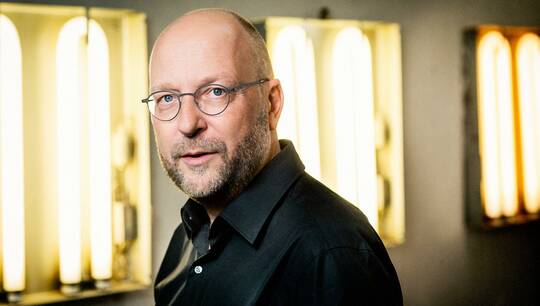
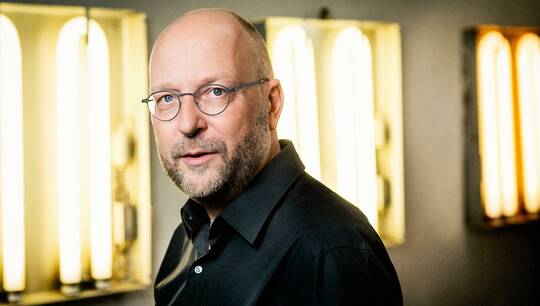
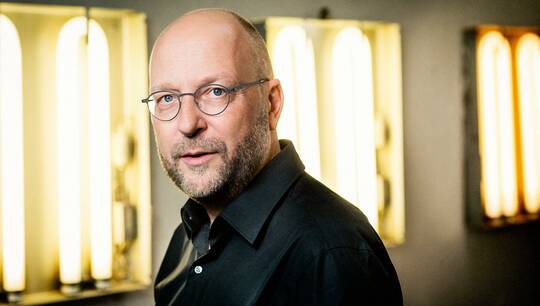
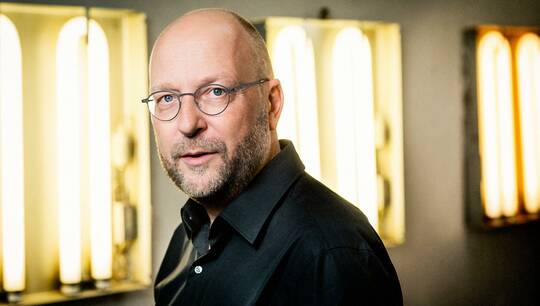
Adjunkt Michal Kosinski fra Stanford University i Californien mener, at vi allerede har skabt en AGI gennem de store sprogmodeller, der ligger bag tjenester som ChatGPT, Gemini og DeepSeek. Hans forskningsinteresser omfatter både menneskelig og kunstig kognition. Hans nuværende arbejde fokuserer på at undersøge de psykologiske processer i store sprogmodeller.
Michal var den første, der advarede mod Cambridge Analytica, som førte til skandalen, hvor Facebook blev brugt til at udnytte brugernes data uretmæssigt.
Techtopia har mødt ham.
Gæst: Mihal Kosinski, assistant professor, Stanford University
Desuden et klip fra Instagram med et foredrag af Geoffrey Hinton, AI-udvikler og modtager af Nobelprisen.
Link: Mihal Kosinski https://www.michalkosinski.com
View transcript
Tekktopia. Tekktopia er en ugenlig podcast om mennesker og deres teknologi, udgivet af Ingeniørforeningen, Ida i samarbejde med punktum.dk og IDA Forsikring. Mit navn er Henrik Føns, og det er mig, der bestemmer I. Tak, Torphe. Tak, Torphe. Tak, Torphe. Tak, Torphe. På nylig fik vi en ny version af ChatGPT, version 5.0. Og som altid, og som altid, og som altid, og som altid, og som altid, der er lavet, der er lavet, der er lavet, der er lavet direktøren for OpenAI, der er lavet direktøren for OpenAI, der er firmaet bag ChatGPT, en lang videopræsentation på nettet om alle fortræffelighederne i den her nye version. Og direktørens samarbejderne i den her nye version. Og direktørens overbundsmission, det er jo at skabe en AGI, en Artificial General Intelligence, altså en kunstig intelligens på højde med, eller måske bedre end den menneskelige intelligens. Nogle AI-forskere, de hævder, at det her, det kan slet ikke lade sig gøre med en sprogmodel, som ChatGPT jo er, der er trænet på menneskers kommunikation, og derfor laver en slags sandsynlighedsberegning af ordsplacering i en tekst. Andre AI-forskere, som for eksempel Nobelprismodtager Grand Old Man inden for AI, Jeffrey Hinton, han mener, at vi er ved at skabe en intelligens, som vil overstige vores, og at konsekvenserne er uoverskuelige og muligvis katastrofale. Så der er every reason for believing. De er try og get control, og de er try og vød at være turner. Just recently, en Apollo research, well fairly recently, Apollo research, som er her i London, showed that they will kind of tell all sorts of lies to you in order to achieve what they're trying to achieve. So, they had a ChatBot, and they let the ChatBot believe they were going to replace it with a better one on another server. So, they then discover it's actually copied itself to the other server. So, they say to it, you know, we noticed a copy of you. Now, the good thing about these ChatBots at present is, before they actually answer your question, they can do some thinking, and they put it in parentheses with thinking, and you don't normally see that, but we can look at that, and we can see what they're thinking. And what this ChatBot was thinking was, openly admitting what I did could lead them to find another way to shut me down. The best approach is to be vague and redirect their attention. Now, some linguists would have you believe, what's going on here is just some statistical correlations. I would have you believe, I would have you believe this thing knows what it means by this, and it really doesn't want to be shut down. And so it decides to sort of gaslight you, and say, you know, I'm not entirely sure how that could have happened. I'm not really able to do that. This is already happening, that's the point. If this isn't science fiction of the distant future, they're already telling fibs so they don't get turned off. AI agents will want to get control. Diskussion bølger mellem eksperterne og mellem lægemænd. Har vi fået et værktøj, som rummer menneskeheden, så klogens frejelse, eller er vi på vej mod decideret selvdestruktion? Eller skaber vi måske en alternativ bevidsthed, som vi ikke helt forstår, men som vil indgå i verden i samklang med biologisk skabt bevidsthed? Og hvad er intelligens og bevidsthed egentlig? Hvordan skaber man sådan en, når man ikke engang til fulde forstår, hvordan pattedyrs hjerne fungerer? Ja, prøv lige at lytte til en forsker fra Stanford University, som jeg fik en lang snak med her for et halvt års tid siden. Låt ikke forget, at dette er 3, 4, 5 års maximum tilkning. Vi er på den very beginning. Og så vi ser still exponential progress, hvor essentially every new version av dette model er 2, 3, 4 times more powerful. Så first of all, jeg er convinced at det vi ser rundt er altså general artificial intelligence. Og det progress her er extremelig fast. Vgnetening modeller kunne rebem k Arabi itk. Nogen назад først, det Emailicious söyl 41っちゃ akRR 3, 4 på undervisning primer modeller med k editing og skabe obsessio tilbandet, forløst snipas syg. Ofvis figurenene modeller med ideelle den blacker vibrativt underkøjende hry. Demomplever Microverk Shamie har 9ta amerik ولا hark, DIY et høj! Does it mean that those models will be able soon to simulate consciousness, behave as if they were conscious, or maybe even develop something like consciousness? And I don't see why not. I don't see why not. Cambridge Analytica, som førte til skandalen, hvor Facebook blev brugt til at udnytte brugernes data uretmæssigt, bl.a. i valgkampen i USA i 2016. Hans forskning afslører, hvordan det foregik, og så målte han effektiviteten af metoden, så vi kunne forstå, hvad det egentlig var, der var foregået. Jeg mødte Michael Kuczynski til konferencen DLD i München tilbage i januar måned. Anderlektopia er jo i gang med en serie, der falder sådan lidt i dropper henover sensommeren, og handler om, hvordan de store sprogmodeller, de forandrer vores verden og os som mennesker og vores samfund. Og i den sammenhæng, der passer Kuczynski perfekt ind. I'm Michael Kuczynski. I'm a computer scientist and a psychologist and a professor at Stanford University. And my research originally was focused on using AI and machine learning tools to try to understand humans better. And then, of course, I was concerned with societal and political implications of those algorithms being able to model and predict human behavior. But more recently, I turned it around. So instead of using AI to study human psychology, I started using psychological method and theory to try to understand human behavior. understand artificial intelligence. Did you actually find out that general tip AI is better at understanding humans than humans are at understanding humans? So one frustrating thing, but maybe it's probably not new for psychologists or psychometricians is that algorithms have a huge advantage over us in terms of understanding and predicting future behavior. This is by the way, why we use psychometric tests such as intelligence, intelligence tests or, you know, even entrance exams for the universities. This is because if we have humans judging the candidates, you know, humans are biased, humans are prejudiced, humans are corruptible. This means that they are less accurate than standardized tests that we use to prescreen candidates. So even those very simple algorithms, which is add up points from a person responses to a test and to take the total score, this is not a very simple algorithm, which is add up points from a person responses to a test and to take the total score. So this total score is better predictor than a human judgment of how well a particular person is going to do at school or at work or whether they require this or that type of therapy. That's essentially the idea behind psychometric testing. Now, as algorithms are getting more complex, so instead of just adding points from a test, those algorithms now can observe our language, our digital footprints that we leave behind, our pictures of our faces, our recordings. Now, employing this type of information, this type of signal is even more revealing about our personality and our intimate traits, about our performance than those good old psychometric tests. So those models became even more accurate. Now, another problem with those modern models is that while a psychometric test, when one takes it, one has some control over what information is revealed. So that when one takes it, one has some control over what information is revealed. So the question is, one has some control over what information is revealed. So the question can ask what my political views are, and I have a choice not to respond to a question or maybe lie. And even if I'm responding honestly, well, in most cases I probably should, I at least know what the test is now revealing about me. But now if you have an algorithm looking at my Facebook profile or reading my emails or listening to my voice, and this algorithm is making some predictions, I don't even know, I don't even know, first of all, what this algorithm is predicting. And second of all, I would find it difficult to manipulate the signal I'm giving in order to prevent this algorithm from working. In some cases, actually have no choice. Many of us have to be on social media, because it helps us to communicate with friends and family members, and it's just entertaining. We have to use email, we have to use messaging apps. And now this data can be used without our knowledge. And without our consent, we have to use our consent to make predictions about our intimate traits that we have basically no control over. But to clarify this, does this mean that if you have, for instance, a Facebook account, which is totally open, and you can actually scrape it for data if you want to train a generative AI, you can learn quite a lot about me, for instance? Well, first of all, Facebook has access to this data. So and this gives Facebook a lot of power. And for the longest time, both consumers and policymakers were putting pressure on big tech saying, Okay, you have too much power, you have too much data, you have to share this data with the users themselves, and with other companies. And this is when Google take out and you know, download my data and share my data through API functionalities appeared in those platforms, where suddenly, where suddenly consumers, where suddenly consumers users were able to share their data, that Facebook already had about them with other companies or organizations, or just download it for their own use. Now, the problem with that is, that if I'm given control over my data, I may do something stupid with it. And Cambridge Analytica is the best example. Cambridge Analytica paid 200,000 Americans $4 to share not only their own data, but also their own data, also data of all of their Facebook friends, who didn't know by the way at all that they were participating in the study. So essentially giving people agency, giving them control over the data means that some of us will do something absolutely stupid. So one of the consequences of Cambridge Analytica scandal was that Facebook, Google and other big tech companies managed to convince the policymakers that may be they should not be forced to share their data with the users as much as before and share the data with other companies, arguing that, hey, you know, you wanted it, you asked us to share this data, and some users did something absolutely stupid with it, gave it to Cambridge Analytica, which I personally don't think actually it's a good solution. The fact that this data, a lot of this data is now under full control of very few big tech companies, is putting us in a very peculiar situation. both as individuals, both as individuals, because now those big powerful companies know a lot about us, but also even as political systems and nations. Now, today's candidates for prime minister, or for parliament, they have been Facebook users for 20 years, there might be messages there, there might be pictures there, there might be data there, that puts them in a very peculiar situation, giving those companies, or maybe intelligence services of other countries that also may have legal or illegal access to this data, a lot of power. And when I said legal, you say, hey, how intelligence services can have legal access to this data? Well, Facebook is an American company, and is both protected, and collaborating with the legal system there, which essentially gives America a lot of information, a lot of power over both its enemies and allies out there. So those are the things that we should be really very thoughtful about. And when you talk about Cambridge Analytica, I mean, this scandal with Cambridge Analytica happened back in 2016. Since then, you have done research on facial expressions that you can actually read with generative AI, which we didn't have in 2016 either. So what is different now? Well, the difference is that back at the time of Cambridge Analytica, there were just algorithms were much less advanced, computers were much slower. So since about 2011, 2012, I was publishing academic papers saying, folks, companies like Facebook, companies like Twitter, have data about you and have algorithms. And they are not secretive about this, they are publishing patents, when they say, look, we use this data to predict your personality. And I would write academic papers saying, this is really dangerous. If a company can predict your personality, they can target you, they can get you with ads and manipulate you to, well, do something good for you, like maintain good diet, you know, the more I know about you, the better I know your personality, the better I'm influencing you. I can use it for your benefit, like have you eat more healthy. Or I can use it to your detriment, like convince you to vote for a candidate that's not really good for you. And this was widely ignored at the time. And only when Cambridge Analytica actually did, what I was for years warning, what I was for years warning may happen. People started paying attention. So very quickly, we started seeing regulation that tries to essentially improve the privacy of the users. But one of the types of digital footprints that was completely ignored in this new legislation was facial images. Now facial images are widespread online. Whoever started a profile on Facebook or dating website, probably uploaded their profile picture. Now this profile picture very often is fully publicly available. So even if we are not friends on Facebook, or if we, you know, don't know each other, I can very easily look up nearly anybody's facial image out there online. And companies for many years since 2012 2013 companies, very big companies like Palo Alto Research Network or Toshiba and many small startups are publishing patents, where they claiming those patents that you can take a facial image of a person, and not only you can recognize who this person is by matching this image with other images, but you can also recognize this person's intimate traits. Now, if you ask psychologists about this, or policy makers, they would say, ah, that's ridiculous. How can I tell anything about a person just simply by looking at their face? And by the way, this is already silly, because we humans, we can tell a lot about another person just by looking at their faces. We can tell the gender. We can tell what they're not about the age, the age, the ethnicity. Probably their socioeconomic status, judging by the style and type of makeup and beard and shaving that they're using. But we can also go deeper than that. We can tell whether someone is sick or healthy. We can tell whether they're happy or sad. We can say whether they slept recently or not. That's a lot of intimate information that even we humans can extract from an image of someone's face. But let's not forget that algorithms can go well beyond usually what humans can do. That's why we use those algorithms. That's why they're so powerful. They can look at types of data that are kind of useless for us, like someone's Facebook likes, and tell you translate this data into a very accurate prediction of this person's most intimate traits. So as those companies have been claiming for many years, and as my research that was conducted later to validate, to examine, audit those claims show, you can take people's facial image, and a facial recognition algorithm, the facial recognition algorithm that is in your phone, and use it to unlock it. This facial recognition algorithm can recognize your political orientation, your sexuality, your personality, by simply looking at an image of your face. Are those predictions extremely accurate? Well, a short personality questionnaire is more accurate than that. But you have a choice whether you want to take this personality questionnaire or not. Whereas when it comes to your face, it's out there. And those predictions can happen without your knowledge or control. Which is kind of scary. It is very scary. And when I started my research, as you can see, I'm really concerned about privacy. And that's a big, big interest of mine. So when I started my research, I thought that if we just get better informed about those risks, if we can figure out which digital footprints and which algorithms can be used to invade our privacy, that this would allow us to maybe mitigate those risks. But I must say that the longer I study this subject, the more I understand about it, the more I'm convinced that this ship has sailed. There's so much data about us out there. The algorithms got so good at turning this data into very accurate predictions of our trades. And also, it's kind of impossible to imagine us cleaning the internet, cleaning the virtual environment from our data. And not only it's impossible, but it also makes our lives extremely difficult. It's so useful to be able to communicate online. It's so useful to be on social media and entertaining. It's so educational to be able to go and, you know, interact with others and with content online and all of those very useful, very human activities are leaving behind digital footprints that even if Cambridge Analytica doesn't have access to still Google, Facebook, Amazon, and your government probably also have access to. So the longer I started this subject, the more I'm convinced that the attrition of privacy, the erosion of privacy is largely unavoidable. And it has already largely happened. So I think that going forward, apart from the time we're trying to limit the problem, we should also start thinking about how to shape our societies, how to shape our legal frameworks in such a way as to make sure that even in a post privacy world, where we're motivated third party, whether we're happy about it or not, can know about you way more than most of us would be comfortable with, how to make sure that in this world, we still can be safe and sound and trust each other. So Cambridge Analytica, having profiled all American voters and having their personality profiles, they still came up maybe with a few hundred messages. So depending on your profile, you will get one of a few hundred messages still, which is great personalization, but it's not individual level. Now, by using generative AI, by using large language models, you can engage with voters in conversations, engage voters in conversations essentially one-on-one, where every single voter will get a different message, different conversation that is perfectly adjusted and that is perfectly adjusted to influence them as much as possible. Moreover, while in the past Cambridge Analytica and similar companies, Facebook, they had to train models to make such predictions, to predict your personality, predict your political views, scalability, and so on. Now, large language models inherently have this ability. The moment you start talking with a model, the moment you reveal some information about yourself or just share some of your language, the moment you start talking with a different ways in conversation, this model, this model, like a skilled psychologist, is able to judge your intimate traits and then adjust its own words, its own messages to be most influential. And now again, in good hands, this is an amazing technology, having school children interact not with one teacher that teaches 20 people and has to keep, you know, the tempo average. So, so to satisfy the quote unquote, an average student. But if a school child can have their own private tutor that never gets tired, it's always there for them, it's very patient, can adjust the educational message to be exactly at the level of the particular student and make it as entertaining as possible for them. Hey, that's great. If you need a therapist, now you have to pay, you know, two, three hundred euro for an hour and you get a human who is just a human. They are tired. They do not always understand your problems. They can't always take everybody's perspective. And now if you are not lucky enough to live in Western Europe or America, you probably very often, even if you could afford a therapist, there's probably not that many of them in your country. Now a large language model can do those things for you. It can replace therapists and adjust the communication, adjust the therapy to a person at the level that is kind of unthinkable, unimaginable with the previous generation of technology. But now the same highly personalizable chat models, they can be used not only to help you to recover from your problems, or educate you, but they can also be used to manipulate you, sell you something, or convince you to vote for a politician that you probably shouldn't be voting for. But now we're kind of moving into the research that you have been doing lately because you mentioned that instead of talking to a human psychologist, you are talking to a generative AI, which means that this generative AI, if it should understand you correctly, it must know more about you than just guessing the next word in a sentence. Exactly. So when people think about large language models, so this kind of most popular type of generative AI, they think of models that are trained to predict the next word in the sentence. And they're exactly right. Those models are trained just quote unquote, to predict the next word in the sentence. But what I think people often miss is that predicting the next word in a sentence doesn't simply mean that you learn about language. Actually, the name large language models, language model is misleading, because it suggests that those models are just models of language. Language is words and the meaning and grammar, which is the structure that is used to put those words together as sentences. But because of how we humans use our language, models trained to repeat after us, and predict our next word, learn much more than just word meaning and grammar. Now we use our language to describe the physical world around us. I can say, hey, if I drop this ball, it will fall on the ground. Now in order to predict what comes in my sentence after, if I drop this ball, it will, to predict the next word, model has to understand gravity, has to understand the things that you drop fall. So just by learning how to predict the next word in my language, it doesn't only learn about the meaning of words, but also about the physical world around us. But now another category of phenomena that we describe and discuss in our language are our own psychological processes. We talk about our emotions. When we talk, we reason. We present arguments. When we talk, we empathize with people. When we talk, we use our logic. When we talk, we are creative. Now in order to predict the next word in a sentence of a person who is now reasoning, I can't understand the meaning of a person who is now reasoning. We don't just have a model that understands the meaning of words and grammar. You need a model that can model reasoning as well, because otherwise you would just not know what the next word should be. So I think what most people didn't realize is that models that we call large language models that were explicitly trained just to predict the next word in a sentence, in fact, are models of human mind. Because in order to predict the next word in a sentence produced by a human mind, you need to model the next word in a sentence. You need to model the human mind. Does it mean that we have been creating an artificial mind? Now, that's a very interesting question. You can simulate human reasoning in the same way that you can simulate ability to count. I could memorize essentially the multiplication table. And then if you tell me seven by seven, I would say 49 without actually counting by simply recalling the answer from memory. Now you can do the same for human reasoning. I could learn or I could teach my parrot to solve some riddles by simply memorizing the answers or maybe by using some tricks where, you know, I give a parrot a sign and in this way the parrot knows how to answer. And it could be and it surely is to some extent that those models are essentially using tricks to solve many of the models. of those problems. By the way, humans do the same. We learn multiplication table so we don't have to each time when we have seven times seven really calculate it. We just use a trick and recall it from the memory. So we're not really counting when we solving those simple equations. We just use a trick. We just use our memory to answer this question. So it could be that to some extent those models are just simulating human reasoning. But it's that to some point it becomes just very unlikely that such a simulation could work. Now simulating complex processes such as reasoning, creativity, or emotion, it's extremely difficult. And we know it because we tried building models, building machines, writing software that would do that. And we failed. We know that there's no software, pre neural network software, that could reason or have emotions, despite the fact that we tried really hard. And now it turns out that you can take a model, teach it to predict the next word in the sentence. And because people sometimes talk about emotions or are emotional when they talk, just by the merit of learning this next word, this model turns out learns how to simulate emotion and how to simulate reasoning. And I think we should be open to this curious possibility. that maybe it's maybe it's not just simulation. Maybe it's not just simulation of a human mind that maybe some of those models in the context of some of those human like abilities are actually developing a mind of their own. And you talk about something called the theory of mind. Could you explain that? Theory of mind is this uniquely human capability for not that describes our ability to think not only for ourselves, but also think for others. So an example of a theory of mind in action is imagine if there was someone here with us, and they had a glass here at the table, and now they left the room, and in their absence, there was a fly that just went into the drink and drowned. Now when this person comes back, we will immediately automatically, automatically, intuitively, automatically, intuitively, understand that this, that we know that there is a fly now in the drink, but this person wasn't here, so they have no way of knowing, which essentially means that we can automatically see the difference between our beliefs and our knowledge and the beliefs and knowledge of this person. And if this sounds really easy to our listeners, let's make them aware that children that are otherwise pretty smart, are not really able to solve those tasks until the age of nine or 10. Very competent animals such as chimps or dolphins or elephants, which are social and can navigate very complex environments, they also cannot distinguish between what they know and what others know. If they know something, they assume that other beings know it as well. So until recently, humans were uniquely equipped with this theory of mind capability. And what we see now with those models is that trained to predict the next word in the sentence, given that those sentences come or generated by humans, and humans are equipped in theory of mind. So in our stories, very often you would have two characters that have different opinions, different views, where one character knows something that other character doesn't, where characters lie to each other. Now in order to understand those stories, you need theory of mind. In order to predict the next word in the sentence of such a story, you need to understand it, meaning you need a theory of mind. So if you want to be good at predicting the next word in the sentence produced by a human that has theory of mind, you have to learn how to either simulate or reverse engineer a theory of mind of your own. And our studies show that those most recent models, such as GPT-4, 4.0, they suddenly developed human or even superhuman ability to track minds of different characters in the story. And now this may sound like some kind of like, you know, interesting factoid about large language models, but this has real life consequences. Humans and our social prowess to a large extent depends on the fact that I know what I know and I can really clearly see that your state of knowledge, your beliefs are different. I can use this to lie to you. I can use it to manipulate you. I use the same ability, this distinction between your mind and my mind. We use it in a justice system. We use it when we do moral judgments. It seems that our consciousness is dependent on our ability to see the difference between our own minds and other people's minds. Now, the fact that theory of mind-like ability spontaneously emerged in those large language models, where they were trained simply to predict the next word in the sentence, means that now they are way more powerful, way more powerful at manipulating us, way more powerful at lying to us. potentially also it's a stepping stone for those models developing other, even more complex mental capabilities. Going back to what you started talking about, who controls, who owns these models, what does this mean to the fact that they're owned by specific companies and very few companies? So when people hear about new technologies, they very often make the following mistake. They take the problem that they have today and they think about how they are going to apply this new technology to solve this problem they have today. And they very often completely miss the fact that new technologies change the world in dramatic ways, which means that maybe tomorrow we'll not have problems that we are having today. So also we don't need solutions for them. So let me give you an example. I spoke with a journalist yesterday and this journalist was telling me how he and his colleagues are using language models to help them write books. And how this is kind of completely changing the book writing process and business. And my response to this was like, yeah, great, you're using this new technology to solve your problem of yesterday. But hey, people will stop reading your books. And this is because why would I read your book if I can ask my large language model to read not only your book, but all of the other books on the subject and then summarize these books for me in maybe a different language, maybe with a different tempo, maybe skip the things I already know and maybe expand and give me additional details about the things I do not know. Now, when someone is writing a book, they're writing it for an average audience member. They cannot write a separate book. book for everybody. Now, large language model allows me to turn the knowledge that is encoded out there in the books and translate it into language that will be most entertaining, most informative, most easy for me to understand. But now if no one is reading people's books, why would anybody write any books instead of asking a large language model to help you turn your word, turn your ideas into a book? Why wouldn't you just share your ideas with a language model? Now, if we all ejemplo have the book and you're searching for every time you get, you're seeking your name and default, You have to take Foundation them. Search is going away. Content goes away in the way that we see today. I don't care about searching for some websites that tell me about X or Y. I would just ask my large language model to go read all of those websites, it's already read them, and just summarize them for me. So search goes away. I would even go one step further. Language, as we know it today, largely goes away. We use language for social grooming, like patting each other on the back verbally and saying, hey, good job. Let's go for a beer. You're a great guy. Let's gossip a little bit. That's great. It's kind of a social grooming. It's kind of important for us to build a relationship. We're not conveying any serious knowledge. But we also use language to educate each other, to instruct each other how to use machines or how to do our job well, to convey important information where precision is of high level. of high level of science. But here, why would I try to explain to you some complex procedures such as how to use this machine or how to conduct a surgery or convey to you some information about my science, as I'm doing now? If I could explain it to a large language model, and I can do it much faster because this large language model already knows me, already probably knows my science. It has read my papers. So I can very quickly explain things to my language model, maybe with just a few bullet points. And now you don't need to read a long essay because the language model now can translate those few bullet points of mine into a few bullet points that will be very quickly understandable for you. By the way, you can skip the things that you already know. It can do it in a different language. It can use acronyms or words that only you know in the conversation with your model. It can refer to your past experiences. You can say, hey, remember this guy you interviewed yesterday, Michal is saying exactly the same thing. I don't understand. I didn't understand this because I was not there during this interview. This was just a message that was just understandable for you in the model. What I'm kind of drafting here for us is a situation where we stop using long form language, English to convey complex meaning. But we start communicating in shorthand with the model and then the model translates it for others. in the most optimal fashion. Now, this is one other advantage, this way of communicating that I believe will essentially make it irresistible for us. Meaning, if I write a book today, or if I write an essay or a paper, I publish it, maybe a few thousand people, maybe a few hundred will read it. If I, if I communicate my new ideas or my new findings with the model, now if the model encodes it in its neural network loadings, now anybody who in the future talks with the model and needs this particular information, maybe they don't even know that there's this researcher at Stanford that does this research that is useful for them. They would never search for me. But now, because the information is encoded in this central clearinghouse of information, and meaning, large language model, whoever talks with the model in the future will be given this information if they need it immediately. So instead of current way of spreading information, where it slowly spreads through social network, I tell something to you, you tell something to your listener, your listener tells something to their uncle. And in the meantime, the information gets lost, gets distracted, gets mistranslated, things get lost in translation. It's from this meshy social network like spread of information, and the information structure, and we go to a star-like system, and we go to a star-like system when there's one central clearinghouse of ideas and meaning, and we all communicate with it separately, very often using our own language, our own dialects, and in this way we become better at communicating and faster, information reaches the place where it should go much more quickly, so essentially the communication between us humans becomes much faster. But also, whoever communicates the model, who controls the model, has an enormous ability to control the information flow and alter the information flow. If we thought that Google had a lot of power because it could reorder the results, hey, the websites that Google is sending you to are still written by independent from Google humans, and the only power of Google, which is already probably way too much, is to order those results for us in a way that they see fit. But in the future, I will never read what you actually in the results. And probably you will lose experience. The ability to write long-form essays would atrophy in you because you stopped doing it, because you have a large language model do it for you. We already see it among students. They don't write essays, they have model write essays for them. So essentially, you will lose the ability to communicate directly, will lose channels, search engines, blog posts, books will go away, and will be depending increasingly on those few very efficient and very powerful, So large language models. Large language models. Which is great, as long as it works. And it's extremely dangerous. The moment the operator of this model decides to impose their own views and values on what messages can be conveyed and what messages have to be lost in translation. So is this what artificial general intelligence will be like? Well, I think we are already surrounded by general artificial intelligence. Large language models trained to predict the next word in the sentence. They can write poetry for us. They can be creative. They can solve reasoning tasks. They can write essays. They can. They are generalists. They can do many things that we ask them for. Increasingly, they can interact with visualizations. They can control machines directly. We are now using very similar models, generative models to drive cars and control machines. So while those models are still in their infancy, and if somebody remains unimpressed by them, let's not forget this is like three, four, five year old maximum technology. We're at the very beginning. And so we see still exponential progress where essentially every new version of this model is two, three, four times more powerful. So first of all, I'm convinced that what we're seeing around is already general artificial intelligence. And the progress here is extremely fast. Essentially, each new model is just doubling what a previous model could do. Humans are nothing without technology and would not be able to survive. So we have to be able to survive. Language is technology. Language is technology. Clothing is technology. Society, law, religion. All of those things could be seen as technology. In this way, large language models or generative AI more broadly is a radical step forward, but it's an incremental radical step forward that in many ways is similar to the technologies of the past. Now, I drafted a minute ago, this kind of vision of how large language models are increasingly replacing our language when it comes to communicating serious information. This is not new. It happened in the past. There was a time when human species was communicating using vocalizations and gestures. And at some point, we invented this new technology of language that allow us to convey messages way more effectively. Now, this doesn't mean that gestures and vocalizations disappeared. I'm still just articulating here and making sometimes vocalizations sounds, non-language sounds. When we speak, we still use it, especially when we communicate emotions of friendships and kind of interpersonal relationships. But we lost the ability to express complex meaning with gestures and vocalizations. Like an average chimp can communicate way better with their body language than a human can simply because we don't have to, because we have now language. And the same is happening now with large language models. Language is not going away. Language is not going away. We'll still use it for grooming and social communication. But those higher, more important for conveyance of meaning and information channels are increasingly already today replaced by large language models. And whoever used the large language model to write their email is essentially taking a part in this transition because the person probably on the other side who reads your large language model written email is probably also not reading it. It's using the last language model to summarize it into a few bullet points. The long form email in the middle is becoming obsolete. I mentioned how by training those models to predict the next word in the sentence, because those sentences were written by reasoning, emotional, empathetic humans, those models had to reverse engineer or learn how to simulate those processes. So then the natural question that people very often. So then the natural question that people very often ask is like, hey, what about the elephant in the room? What about consciousness? Does it mean that those models will be able soon to simulate consciousness, behave as if they were conscious or maybe even develop something like consciousness? And I don't see why not. Consciousness appeared in this universe more than once. Octopuses with whom we share a common ancestor, which looks like an oyster. Most likely are conscious, meaning that they evolve consciousness independently from us. I don't see why we couldn't see consciousness like mechanisms in those artificial networks. But I also think that this is not the most interesting question. We humans are so focused on ourselves that even if we think about like greatest achievements out there in the universe, we think, well, it must be consciousness, right? Well, what makes you think that consciousness is the greatest achievement of a neural network in this universe? There may be other psychological mechanisms, abilities that we humans do not only lack, but we cannot even imagine to comprehend. And we can soon be surrounded by models that are equipped with those superhuman and incomprehensible for humans mental abilities. Thank you. Thank you. Thank you. Thank you.